School of Culture and Communication
The School of Culture and Communication is a thriving teaching and research centre for critical thinking in the humanities, led by world-leading scholars researching literary and cultural studies, art history, cinema and performance, media and communication and Indigenous studies.
Areas of expertise
The expertise within the School is diverse, spanning the gamut of communications, literary, and cultural fields.
Our research centres, hubs and units
-
ARC Centre for Excellence for the History of Emotions
A multidisciplinary centre researching the history of emotional behaviours from medieval Europe to the present.
-
Centre for Advancing Journalism
This centre fosters and encourages journalism that helps people be informed and engaged citizens.
-
Research Unit in Public Cultures
A unit researching transformations in public culture produced by new intersections of knowledge, media, space and mobility.
-
Visual Cultures Resource Centre
The University of Melbourne’s Visual Cultures Resource Centre (VCRC) holds one of the largest collections of art reproductions in the Southern Hemisphere.
About the school
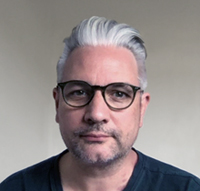
The School of Culture and Communication is a proud community of scholars dedicated to furthering research into critical thinking in the humanities, and providing a rich learning experience for enquiring minds. We contribute a range of subjects to the Bachelor of Arts, as well as offering vocationally-oriented Masters degrees and an extensive doctoral program.
Our School considers the public life of the humanities an enduring tradition that enriches contemporary society, and through community and industry partnerships we engage with a wider audience. Explore our website to discover more about our courses, research programs, graduate seminars, and cultural events.
Associate Professor Paul Rae
Head, School of Culture and Communication
Latest news and events
Contact us
For general student enquiries, enrolment and administration, please contact Stop 1
Email: scc-hos@unimelb.edu.au
-
Art History and Art Curatorship
The Art History and Art Curatorship program researches and develops knowledge in the history art. Evidence-based critical thinking and visual and aesthetic literacy prepares students for a richer engagement with the world.
-
Arts and Cultural Management
The Arts and Cultural Management program explores the tension between culture as an economic activity and culture as symbolic expression through four key themes – organisations, governance, identity and labour.
-
Creative Writing
Creative Writing is a medium used to communicate, resist, provoke and seek or find understanding. Our research investigates the artistic, historical, cultural and societal impacts of the written word.
-
English and Theatre Studies
English and Theatre Studies is a combined program that focuses on the form, meanings and effects of imaginative writing and dramatic performance, and explains how these practices engage with the everyday world.
-
Gender Studies
Our program explores the significance of gender and sexuality on a range of discourses embedded within culture, identity and global history.
-
Indigenous Studies
Indigenous Studies is an interdisciplinary program that offers teaching and learning, and research activities that critically engage with the history, knowledge and cultures of Indigenous peoples both in Australia and globally.
-
Journalism
Our program is focused on preparing graduates for careers in rapidly changing media landscapes. We offer practice-based courses enabling our students to learn many journalistic skills by doing journalism, at a high standard, for real audiences.
-
Media and Communications
Our program conducts cutting-edge research to understand how the flow of data, ideas, personal stories, and formats have shaped our culture and society.
-
Publishing and Communications
The Publishing and Communications program researches current issues in the publishing industry and educates the publishers and editors of tomorrow.
-
Screen and Cultural Studies
Our program examines the history and practice of contemporary culture and screen media. Our research looks at the production, aesthetics, circulation, consumption and uses of screen media and cultures.
Our School carries out creative, fundamental and applied research projects into the past, present and future of the humanities and social sciences. Through our unique breadth and transdisciplinary focus, our research makes real and lasting impacts that enrich contemporary society through the enduring tradition of the humanities on public life.
Research projects
Our world class researchers are renowned for their interpretation, analysis and debate on historical and contemporary culture and communication. Explore our broad range of current and completed research projects.
-
Disability and the Performing Arts in Australia: The Last Avant Garde
The Last Avant Garde is an ARC Linkage project exploring artistic innovation and the work of disability artists in Australia.
-
First Nation’s Media Australia research
The Centre for Advancing Journalism (CAJ) is working with First Nations Media Australia (FNMA) on research to measure the reach and impact of Indigenous broadcasting channels and services across remote, regional and suburban Australia.
-
Indigenous Storytelling and the Living Archive of Aboriginal Knowledge
An ARC Discovery Indigenous Fellowship project that aims to develop a non-linear, interactive archiving system in collaboration with Aboriginal people.
-
New Beats: Mass redundancies, career changes and the future of Australian journalism
This ongoing project is investigating what happens to around 3,000 journalists who became redundant in Australia during or since 2012.
-
New tastemakers and Australia's post-digital literary culture
This project examines how engagements with digital media and platforms have changed the ways in which Australian literature is produced, distributed and consumed.
-
The Future Cemetery
The research investigates the potential of new and innovative technologies to be incorporated into Australian cemeteries and memorial spaces.
-
Towards an Australian Ecological Theatre
This project explores how the Australian performing arts is responding to the climate emergency and how human interactions with the natural world have been represented historically on Australian stages since the 1950s.
-
Community Publishing in Regional Australia
This project investigates how community groups in regional Australia are using digital technology to publish and distribute books.
Research collaborations
Our research collaborations bring together experts who are internationally recognised leaders in their fields.
-
Asian Cultural Research Hub (ACRH)
ACRH fosters a local, national and international scholarly community for PhD students and Early Career Researchers working on Asia-related cultural studies research.
-
Child and Family Mediascape Research Group (CFMRG)
A collaboration between scholars from media studies and book publishing studies to address key challenges faced by children and their families in today’s rapidly changing media context.
-
CODED AESTHETICS
CODED AESTHETICS explores sense-making through human-machine entanglement.
-
Communicative Cities
A platform for strategic research projects and tactical interventions into the issues transforming public culture.
-
Critique, Creativity, Innovation
A collaboration exploring the diverse histories and possible futures of creativity and critique.
-
Critical Fashion Studies
A collective uniting scholars, practitioners and industry to advance research on fashion sustainability and ethics.
-
History, Memory and Decolonial Futures
The History, Memory and Decolonial Futures Research Collective advances and promotes multidisciplinary research on the social efforts to dismantle colonial and settler colonial power structures to create decolonial futures.
-
Human Rights and Animal Ethics Research Network
An interdisciplinary network researching into transformations in response to Human-Animal Studies (HAS).
-
Postnational Art Histories
A network of scholars developing major projects that rethink the paradigms of national art history.
Research units and centres
Through critical thinking in the humanities, our research units and centres undertake research that has a tangible impact in the world.
-
ARC Centre for Excellence for the History of Emotions
A multidisciplinary centre researching the history of emotional behaviours from medieval Europe to the present.
-
Australian Institute of Art History
Our vision is to advance research in the creation, use, and cultural meaning of art in all its forms from ancient rock art to the digital age.
-
Centre of Visual Art
A centre facilitating innovative, cross-disciplinary research that focuses on the significant cultural issues of today.
-
Enlightenment Romanticism Contemporary Culture
A unit re-envisioning the transition from Enlightenment to Romanticism and its legacies in the present.
-
Research Unit in Public Cultures
A unit researching transformations in public culture produced by new intersections of knowledge, media, space and mobility.
Partner with us
Our researchers welcome collaboration.
Please contact us to learn more about partnering with SCC.
Executive
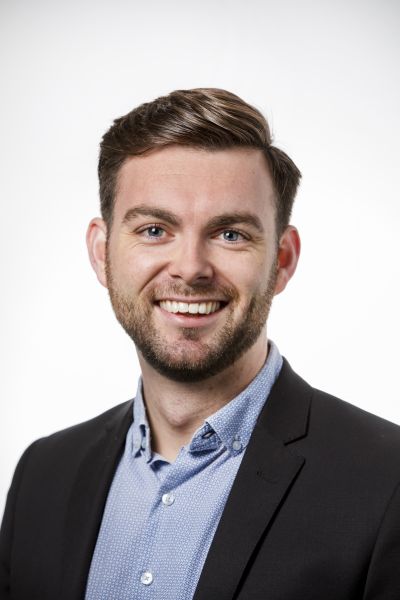
Jackson Harnwell
Heads of Program
Kirsten Stevens
Art History and Art Curatorship
Program staff

Prof Ian McLean
Prof Anne Dunlop
A/Prof Claire Roberts
A/Prof Anthony White
Honorary staff
Arts and Cultural Management
Kirsten Stevens
Program staff
Dr Caitlin Vincent
A/Prof Beth Driscoll
Dr Kirsten Stevens
Honorary staff
Asian Art Research
A/Prof Claire Roberts
Centre for Advancing Journalism
Program staff
A/Prof Andrew Dodd
Ms Jo Chandler
Honorary staff
Creative Writing
Program staff
A/Prof Eddie Paterson
Honorary staff
English and Theatre Studies
Program staff
A/Prof David McInnis
Prof Deirdre Coleman
Dr Sara Fernandes Crouch
Dr Joe Hughes
Prof Peter Otto
Dr Elliot Patsoura
Prof Stephanie Trigg
Honorary staff
Enlightenment, Romanticism, Contemporary Culture Research Unit (ERCC)
Prof Peter Otto
Gender Studies
A/Prof Kalissa Alexeyeff
A/Prof Ana Dragojlovic
Gender Studies affiliated staff
Dr Chloe Diskin-Holdaway
Prof Lan Anh Hoang
Dr Hannah McCann
Prof Fran Martin
Indigenous Studies
Program staff
Prof Barry Judd
Dr Odette Kelada
A/Prof Jeanine Leane
Honorary staff
Media and Communications
Program staff
Prof Mark Davis
Dr Jennifer Beckett
Dr Alexandra Dane
Dr Steven McIntyre
A/Prof Wonsun Shin
Honorary staff
Publishing and Communications
Program staff
Dr Alexandra Dane
A/Prof Beth Driscoll
Dr Sybil Nolan
Honorary staff
We are currently unable to retrieve the Staff contact information requested.
Screen and Cultural Studies
Program staff
Prof Fran Martin
Dr Hannah McCann
Honorary staff
-
Undergraduate
Information for current undergraduate students. Including essay writing guides and citation styles, attendance and extensions
-
Honours
Information for current honours students. Including essay writing guides and citation styles, minor thesis due dates, and attendance.
-
Graduate coursework
Information for current graduate coursework students, including essay writing guides and citation styles, cover sheets, minor thesis due dates, attendance and internships
-
Graduate research
Information for prospective students regarding the Doctor of Philosophy (Arts) or Masters by Research program.
-
Alumni Projects
Our graduate researchers pursue academic careers and also use their skills to shape careers in other fields.
-
Scholarships and prizes
The School of Culture and Communication offers a range of awards to provide scholars with opportunities for development and research.
-
Meet graduate researchers - School of Culture and Communication
Our graduate researchers are working on a variety of research projects in the School of Culture and Communication. Learn more about their work and their areas of expertise.